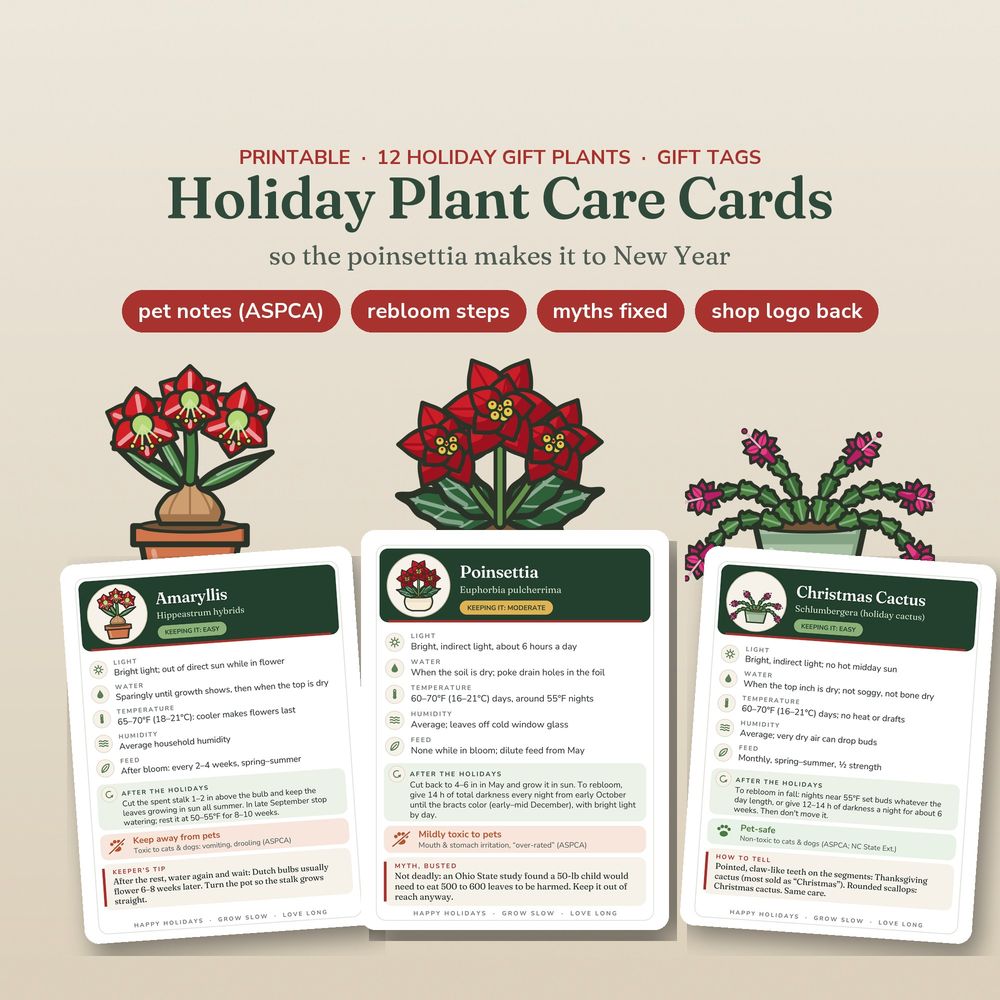
The short answer: keep a poinsettia in bright, indirect light for about six hours a day, at 60 to 70°F by day and around 55°F at night, away from cold glass and drafts. Water only when the soil is dry, and poke holes in the foil wrap so water drains. It needs no fertilizer while it's in color. To make it bloom again next Christmas, rest it in spring, cut it back around May 1, grow it in sun all summer, and give it at least 14 hours of complete darkness every night from about October 1.
Poinsettia care indoors through the holidays
Light. Give it bright, indirect light for about six hours a day. A spot near a sunny window is right, but the leaves shouldn't touch the glass.
Temperature. Poinsettias like 60 to 70°F during the day and around 55°F at night. If your living room stays warm all evening, move the plant to a cooler room at night. Keep it out of cold drafts from doors and away from heat vents and fireplaces.
Water. Water when the top of the soil feels dry, then let it drain. Many poinsettias come wrapped in decorative foil or plastic, which holds water like a bowl. Poke holes in the bottom, or lift the pot out to water it in the sink. Roots that sit in water rot, and root rot can kill the plant.
Food. None while it's in color. Save fertilizer for spring, when new growth starts.
Buying and bringing it home. Choose a plant with little or no pollen showing on the tiny yellow-green flowers in the middle of the colored leaves; it will stay colorful longer. If it's near freezing outside, keep it in its sleeve for the trip home, because cold air can damage the leaves.
Why are my poinsettia's leaves falling off?
Some leaf drop is normal: the colored leaves, called bracts, and the green leaves fall once the tiny flowers in the center have shed their pollen. Early or sudden leaf drop usually comes down to one of these.
| What you see | Likely cause | What to do |
|---|---|---|
| Leaves drop after it's moved near a window, door or heat vent | Cold glass, a draft or a sudden temperature change | Move it to a steady spot, back from the glass and away from doors and vents |
| Wilting and soggy soil | Too much water, often trapped in the foil | Poke drain holes, let the soil dry before watering again |
| Wilting with dry, light soil | Too dry | Water thoroughly, let it drain, check again in a few days |
| Leaves yellow and drop in a dim spot | Too little light | Move it to a brighter spot with indirect light |
| Leaves drop in late winter after weeks of color | The bloom is simply finishing | Nothing is wrong; decide whether to rest it or compost it |
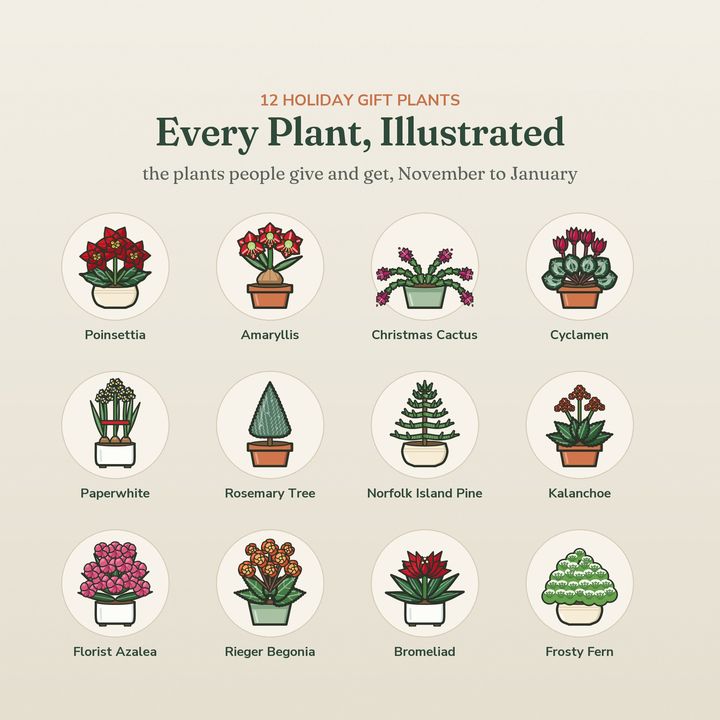
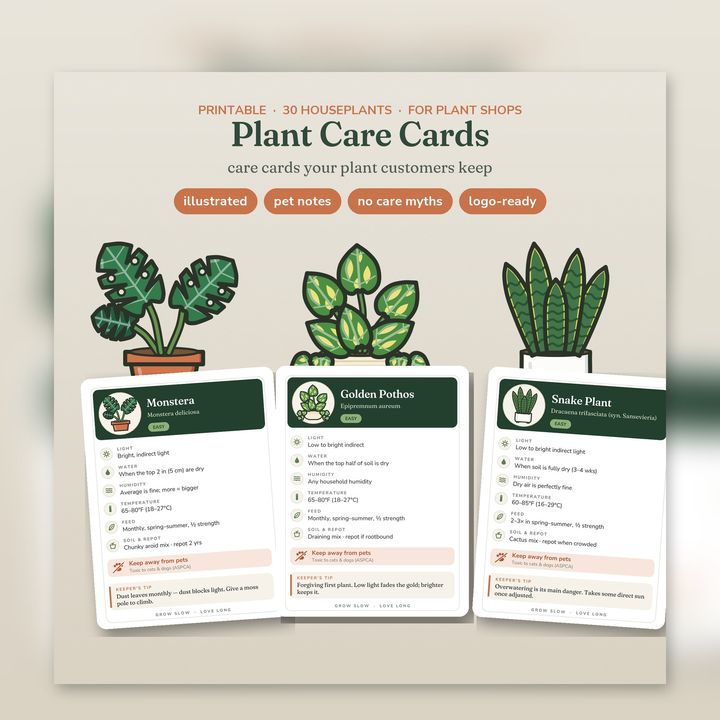
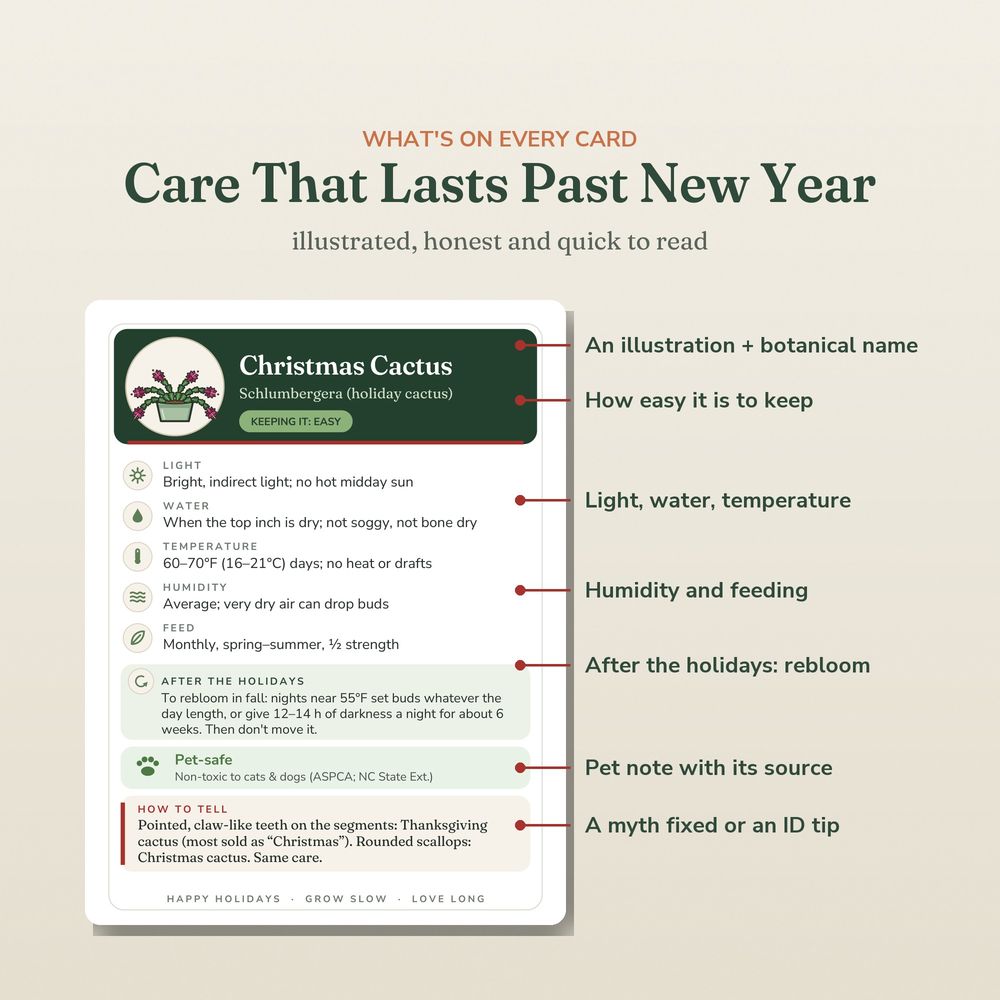
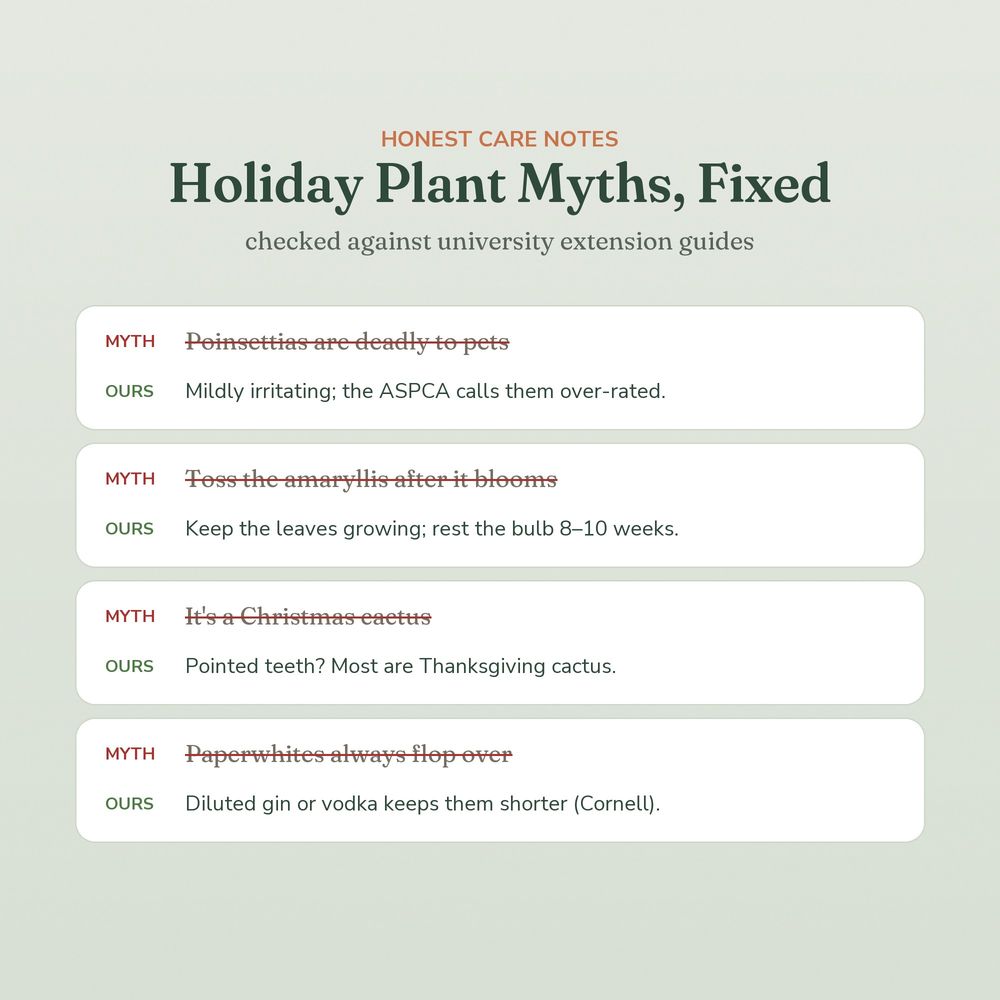
Giving poinsettias, amaryllis or a Christmas cactus this year? Sagestead's Holiday Plant Care Cards cover 12 gift plants, with care notes checked against university extension guides and ASPCA pet notes, plus To/From gift tags. See the cards →
Poinsettia care after Christmas: how to keep it alive year-round
Most people compost their poinsettia when it fades, and there's no shame in that. If you'd like to keep it year-round and see it color again, this is the schedule University of Illinois Extension recommends, in the order you'll need it.
- January to March: enjoy it. Keep up the holiday care. With good light and careful watering, the color can last for months.
- When half the leaves have fallen: let it rest. Water less until the soil is completely dry, then move the pot to a cool, dim spot. Give only enough water to keep the stems from shriveling.
- Around May 1: cut it back. When new growth begins, cut the stems back to 4 to 6 inches above the soil. Repot now if you want to. Put it in a sunny window, water when dry and feed occasionally with a diluted fertilizer.
- After your last frost: outside for summer. Once nights stay above 50°F, move it outdoors, adding direct sun gradually over a week or two. Somewhere with 6 to 8 hours of sun and a little afternoon shade is ideal. Water more often in summer, and fertilize every couple of weeks.
- Every 3 to 4 weeks until mid-August: pinch. Pinch off the shoot tips, leaving two or three full leaves below each cut. Pinching keeps the plant bushy instead of leggy. Stop by mid-August.
- When nights cool to 55 to 60°F: bring it in. Back to a sunny window indoors.
- From about October 1: long nights. Start the darkness treatment below.
How to make a poinsettia turn red again
Poinsettias are short-day plants: they color up when the nights are long. In a home with lamps and televisions, the nights often aren't dark enough on their own, so you make them long.
- Every night, at least 14 hours of complete darkness. Put the plant in a closet, or cover it with a box, from about 5 p.m. to 8 a.m.
- Every day, bright light. Take it out in the morning and give it a sunny spot, with days between 60 and 70°F.
- No light leaks at night. A lamp switched on in the room, a streetlight through the window or a gap under the closet door can delay or stop the color.
- Keep it cool enough. Night temperatures above 70 to 75°F may delay or prevent flowering.
- Keep going until the color is back. Start around October 1 and continue until the colored bracts are almost fully expanded, usually by early to mid December. That takes about 8 to 10 weeks.
Honest note: reblooming takes months of attention and a truly dark closet. Some gardeners love the challenge; others start fresh each December. Both are fine.
Is a poinsettia toxic to cats and dogs?
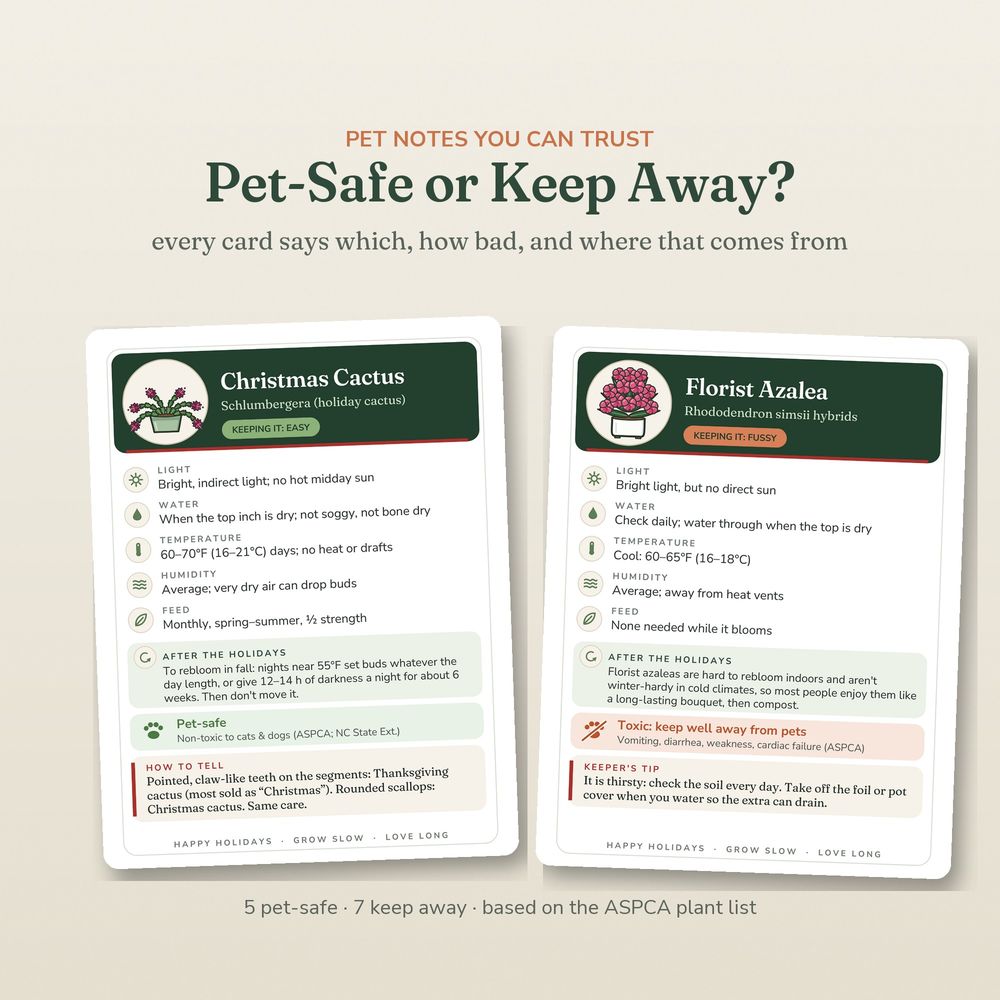
Mildly. The ASPCA lists poinsettia as toxic to dogs, cats and horses, and describes the effect as irritation of the mouth and stomach that sometimes causes vomiting, adding that its toxicity is "generally over-rated." It is not the deadly plant of holiday legend, but it's still best kept where pets can't chew it.
For children, the old scare story doesn't hold up either. An Ohio State University study, cited by University of Illinois Extension, found that a 50-pound child would have to eat more than 1¼ pounds of leaves, 500 to 600 of them, to be harmed. Keep it out of reach anyway: eating it may still upset a small stomach.
One more thing: the milky sap may cause a reaction in people with a latex allergy, so wear gloves when you cut it back in May.
Not medical or veterinary advice. If a child eats part of any plant, call Poison Help at 1-800-222-1222. If a pet eats any plant, call your veterinarian or the ASPCA Animal Poison Control Center at (888) 426-4435 (a fee may apply).
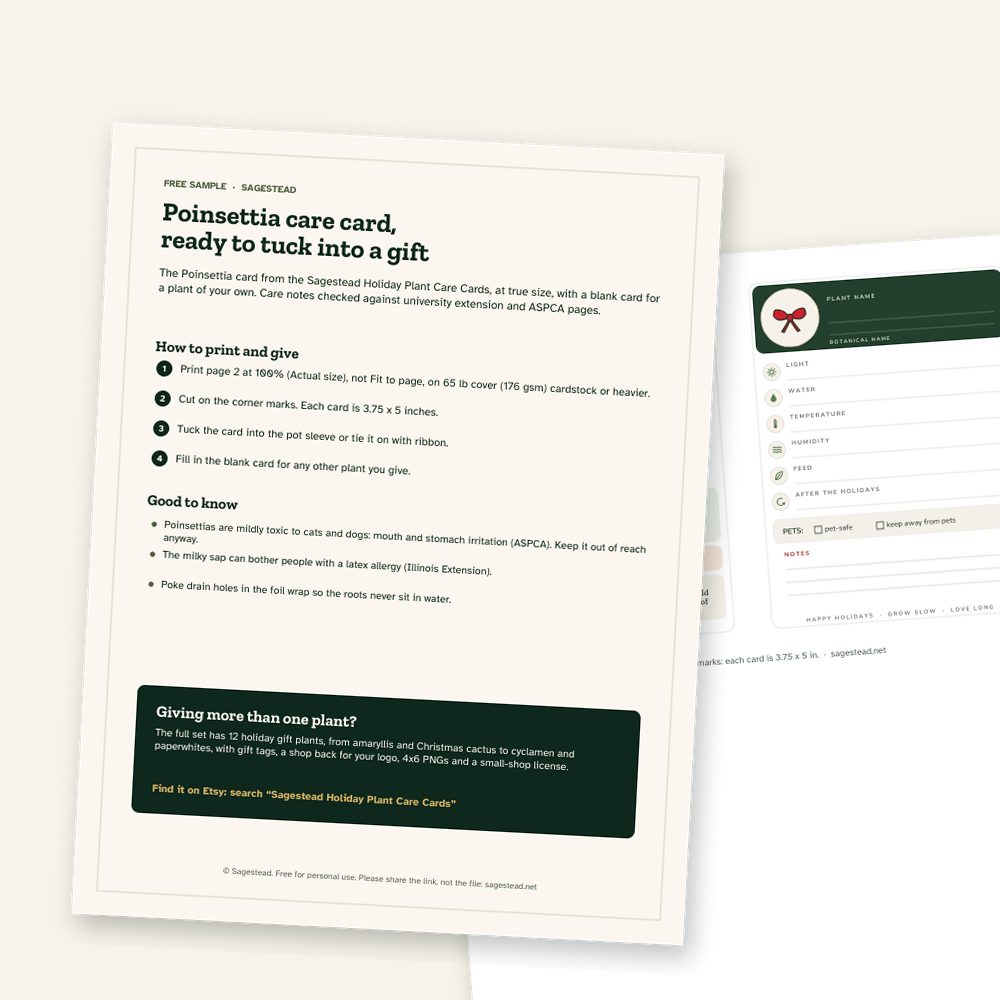
Free printable poinsettia care card
Giving a poinsettia? Tuck its care card into the pot. This is the Poinsettia card from the full Sagestead set, at true size, with a blank card for another plant.
- Light, water, temperature and feeding at a glance
- After-the-holidays care and how to rebloom
- Pet note based on the ASPCA list
- A blank card to fill in for any plant